
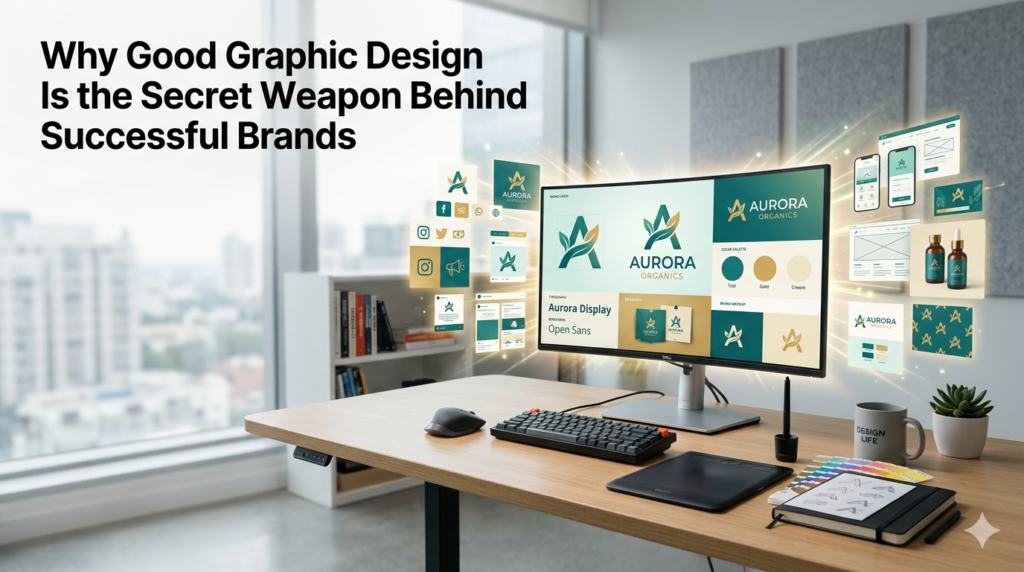
Introduction
In today’s competitive business environment, standing out in the marketplace is more challenging than ever. Companies compete not only through their products and services but also through how they present themselves to customers. While many entrepreneurs focus heavily on advertising budgets, search engine optimization, and marketing campaigns, one powerful factor often determines whether a brand captures attention or gets ignored—graphic design.
Effective visual communication shapes how people perceive a business. The colors, typography, imagery, and layout used by a company create an immediate impression that influences trust and credibility. When a brand presents itself with professional and consistent visuals, audiences are far more likely to view it as reliable and trustworthy.
Design is not simply about decoration. It is a strategic communication tool that supports branding, marketing, and customer engagement. From logos and websites to social media posts and promotional materials, visual presentation plays a crucial role in shaping brand identity.
Successful businesses understand that strong design influences customer perception at every stage of the buyer journey. When visual elements are carefully planned and executed, they strengthen marketing campaigns, improve user experience, and make brands more memorable.
This article explores why strong visual design is often the hidden advantage behind successful brands and how businesses can use it strategically to build recognition, increase engagement, and support long-term growth.
Table of Contents
The Power of First Impressions
Human beings are naturally drawn to visuals. When customers encounter a new brand, their first impression is usually formed within seconds. This initial judgment often depends on how the brand appears visually rather than what it says.
If a website looks outdated or poorly organized, visitors may assume the business lacks professionalism. On the other hand, a clean and visually appealing design signals credibility and attention to detail.
Elements that shape a strong first impression include:
- Clear and recognizable branding
- Balanced color schemes
- Professional typography
- Well-structured layouts
- High-quality imagery
These components work together to create an experience that feels organized and trustworthy. Businesses that invest in strong visual presentation significantly improve the chances that visitors will stay longer, explore their offerings, and eventually become customers.
Creating a Memorable Brand Identity
One of the most important roles of design is building a clear and consistent brand identity. A brand identity represents the personality and visual language of a business. It includes elements such as logos, color palettes, typography styles, and design guidelines.
When these elements are applied consistently across all marketing channels, they help audiences recognize a brand instantly.
For example, many global companies have visual identities that are recognizable even without seeing the brand name. Their colors, shapes, and visual style immediately signal their identity.
A strong brand identity helps businesses achieve several important goals:
- Improved brand recognition
- Increased customer trust
- Clear communication of brand personality
- Greater consistency across marketing platforms
When customers repeatedly encounter consistent visual elements, the brand becomes more familiar and easier to remember.
Visual Design and Digital Marketing
Modern marketing depends heavily on visual communication. Advertising, social media campaigns, and online content all rely on imagery to capture attention quickly.
Strong visuals can dramatically increase the effectiveness of marketing efforts. For instance, advertisements with compelling imagery often outperform text-heavy campaigns because they capture attention more quickly.
Visual design strengthens marketing strategies in several ways:
- Making advertisements more engaging
- Improving the visual appeal of landing pages
- Enhancing social media posts
- Supporting storytelling through visuals
When visual elements align with marketing goals, campaigns become more persuasive and memorable.
Businesses that combine strategic marketing with professional design often see improved engagement and stronger results across their digital channels.
Enhancing Website User Experience
A company’s website often serves as the main destination for potential customers. Whether visitors arrive through search engines, social media, or advertisements, the website becomes the central place where they learn about the business.
Design plays a critical role in shaping how users interact with a website. If a site feels cluttered, confusing, or visually overwhelming, visitors may leave quickly.
Effective website design focuses on usability and clarity. Important elements include:
- Simple navigation menus
- Readable typography
- Logical content structure
- Responsive layouts for mobile devices
- Balanced spacing between elements
When websites are designed with the user experience in mind, visitors can easily find information and explore the business’s offerings.
Better user experience leads to longer visit durations, higher engagement, and greater conversion potential.
The Role of Visual Content in Engagement
Online audiences increasingly prefer visual content over large blocks of text. Images, illustrations, and videos communicate ideas quickly and are easier to consume.
This is why many successful brands prioritize visual storytelling in their marketing strategies.
Visual content can take many forms, including:
- Social media graphics
- Infographics explaining complex ideas
- Product images
- Short promotional videos
These visuals help break down information into easily understandable formats. Instead of reading lengthy explanations, audiences can quickly grasp the message through images and visual cues.
Engaging visual content also encourages sharing on social platforms, expanding a brand’s reach organically.
Simplifying Complex Information
In the digital age, audiences are constantly exposed to information. Because of this overload, businesses must communicate messages clearly and efficiently.
Visual design helps simplify complex ideas through structure and organization.
Techniques that improve information clarity include:
- Infographics presenting data visually
- Icons that represent concepts quickly
- Organized layouts that guide the reader’s eye
- Visual hierarchies that highlight key points
These techniques help audiences understand important information without feeling overwhelmed.
Educational content becomes far more effective when supported by strong visual presentation.
Building Trust Through Consistency
Trust plays a major role in customer decision-making. People prefer brands that appear reliable and professional.
Consistent visual identity strengthens trust because it demonstrates attention to detail and organizational clarity.
Consistency should appear across all customer touchpoints, including:
- Websites
- Social media profiles
- email marketing materials
- advertisements
- packaging and printed materials
When customers encounter the same visual style repeatedly, they develop familiarity with the brand. Over time, this familiarity builds confidence and credibility.
Brands that maintain consistent presentation often appear more established and trustworthy than competitors with inconsistent visuals.
Supporting Business Growth
Strong visual communication does more than improve aesthetics—it directly supports business growth.
When design is aligned with marketing and branding strategies, it helps businesses achieve several important outcomes:
- Increased brand awareness
- Better audience engagement
- Higher perceived professionalism
- Improved customer loyalty
Companies that invest in professional branding often see stronger marketing performance because their messaging becomes clearer and more compelling.
Design also strengthens advertising campaigns by making them more visually appealing and memorable.
Over time, this leads to stronger brand recognition and greater market presence.
The Competitive Advantage of Visual Strategy
In crowded markets, differentiation becomes essential. Many businesses offer similar products or services, making visual identity one of the few ways to stand out.
A thoughtful visual strategy helps businesses distinguish themselves from competitors.
Distinctive color palettes, recognizable typography, and consistent imagery create a unique presence that audiences remember.
When customers encounter multiple brands offering similar solutions, the one with the strongest visual identity often leaves the most lasting impression.
This advantage can influence purchasing decisions even when products are comparable.
The Future of Brand Communication
As digital platforms continue to evolve, visual communication will become even more important. Short attention spans and the rise of visual-first platforms mean that brands must communicate messages quickly and clearly.
Businesses that prioritize visual storytelling will be better positioned to capture attention in increasingly competitive markets.
Investing in professional design today prepares companies for the future of digital communication, where clarity, creativity, and visual impact will play a central role.
Conclusion
Strong visual communication has become an essential component of modern branding and marketing. From shaping first impressions to strengthening marketing campaigns and improving website experiences, design influences nearly every interaction customers have with a brand.
Companies that treat design as a strategic asset rather than a decorative afterthought gain a significant competitive advantage. Clear visual identity helps audiences recognize and remember a brand while building trust over time.
When design supports marketing strategies and business goals, it creates a cohesive system that attracts customers, communicates value, and drives long-term growth.
Ultimately, investing in professional visual design is not just about aesthetics—it is about building a brand that people recognize, trust, and choose repeatedly.
Ready to Strengthen Your Brand?
If your business wants to stand out in the digital world, strong visuals and strategic marketing are essential.
As a freelance professional providing graphic design, video editing, and digital marketing services, I help businesses create compelling visuals that capture attention and support brand growth.
Whether you need:
- professional branding and logo creation
- engaging marketing visuals
- optimized design for websites and social media
I can help transform your ideas into impactful visual experiences.
Let’s work together to build a stronger brand and grow your business online.